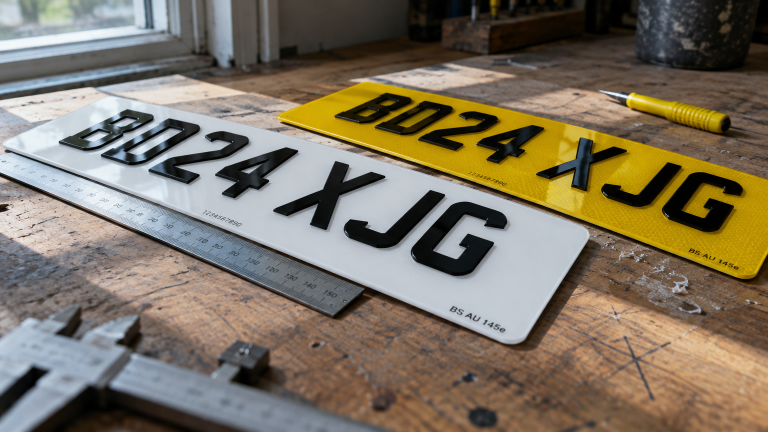

3D and 4D number plates are tough, but they still need a little care to stay sharp, legal and easy to read. Road spray, salt, bugs and motorway grime all build up on a plate, and raised characters give dirt more edges to cling to. This guide covers how to clean 3D gel and 4D plates safely, how weather and mileage affect them, and when it is time to replace them.
Why Plate Care Matters
It is not just about looks. Your number plates must be readable at all times, and that includes being clean. A plate that is caked in dirt, faded or cracked can be treated as obscured, which can mean a fine of up to £1,000, and a damaged or hard to read plate can fail the MOT. Police cameras and car park systems also need to read your plate, so a dirty one can cause problems you never see coming.
How to Clean 3D Gel Plates
3D gel plates have a smooth, domed resin over each character, so dirt sits on the surface and wipes off easily.
- Rinse the plate with clean water to lift loose grit, so you are not rubbing it into the gel.
- Wash with warm water and a little car shampoo on a soft sponge or microfibre cloth.
- Rinse again and pat dry with a clean microfibre towel.
Avoid scouring pads, polishing compound, solvents and household cleaners such as bleach or oven cleaner. They can scratch or cloud the clear resin and take the shine off.
How to Clean 4D Plates
On 4D plates, each character is laser cut acrylic standing proud of the plate, so grime collects in the corners and along the base of each character.
- Rinse first to remove grit.
- Wash with car shampoo on a microfibre cloth, working around each character.
- Use a soft detailing brush to clear the edges and the gaps between characters.
- Rinse and dry, paying attention to the base of each character where water sits.
Matte black 4D characters are best cleaned with shampoo only. Wax and polish can leave shiny patches on a matte finish.
Pressure Washers and Car Washes
Both styles are fine with a normal wash, but keep a pressure washer lance at a sensible distance and do not blast the edges of the plate or individual characters at close range. Repeated close-up blasting can lift the edge of a sticky pad or work at the characters over time.
Weather, Winter and Motorway Miles
- Road salt: rinse plates after driving on gritted roads. Salt dulls the finish if it is left to dry on.
- Ice: never scrape ice off a plate or characters with a scraper or anything hard. Use de-icer or let the car warm up. Our winter car protection checklist has more tips.
- Bugs and tar: long motorway runs leave bug splatter on the front plate. Soak it with warm soapy water before wiping, rather than scrubbing.
- Stone chips: the front plate takes the most hits. Check it now and then for chips or cracks.
- Sun: quality plates made to BS AU 145e are built to resist fading, but a plate that has gone pale or patchy should be replaced.
Check the Fixings
When you clean the plates, check they are still secure. Sticky pads can lose grip over time, especially after a cold, wet winter, and a loose plate rattles, cracks or falls off. Screws or a number plate holder give a firmer fit. Replacement pads, screws and caps are in our number plate accessories.
When to Replace Your Plates
- The plate is cracked, chipped or bent.
- A 4D character has lifted, moved or come off.
- The gel on a 3D plate has cracked, yellowed or gone cloudy.
- The reflective background has faded or peeled.
- The characters are hard to read from a distance.
A damaged plate is not worth the risk of a fine or an MOT failure. Replacements are quick: see how to get number plates made up for the documents you need. If you are choosing a new style, our 3D vs 4D plates comparison explains which is easier to live with.
Replacement Plates, Made While You Wait
Visit our shop at 133 Henry Street, Accrington, BB5 4EP, where plates are made while you wait, or order 3D gel or 4D plates online from £19.99. Orders placed before 1pm are dispatched the same day.