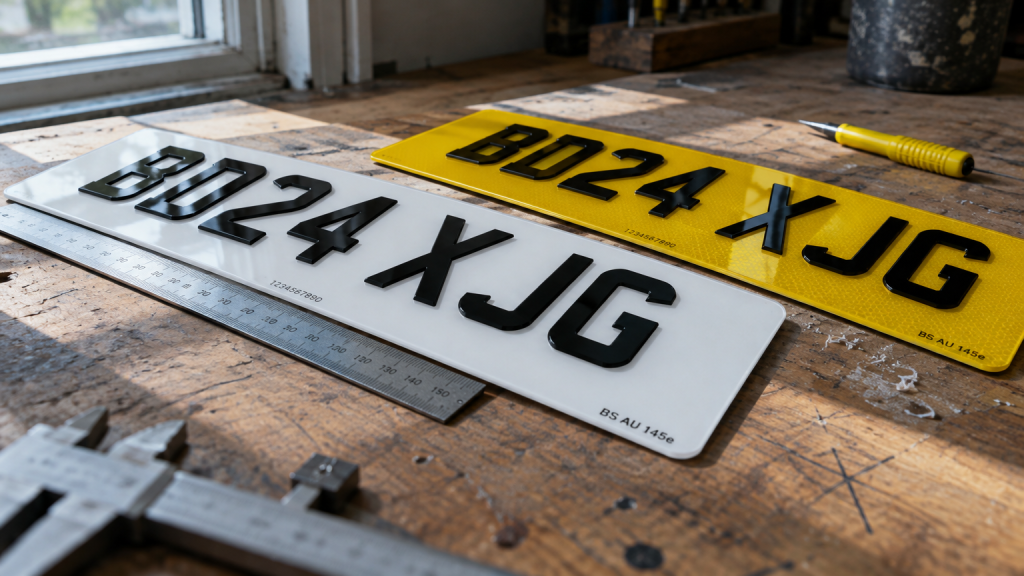
Checking whether a custom number plate is road-legal in the UK comes down to five things: the British Standard mark, the supplier details, the font and spacing, the character finish, and the background colour. Every plate fitted to a vehicle on public roads must meet the BS AU 145e standard so police and Automatic Number Plate Recognition cameras can read it in all weather and light conditions. You can carry out this check yourself in a couple of minutes by looking closely at the surface, the lettering, and the bottom edge of the plate.
Custom Number Plates Check: What BS AU 145e Means
BS AU 145e is the British Standard that governs all road-legal number plates in the UK. It sets strict requirements for material durability, reflectivity, and character visibility so vehicles remain identifiable at a distance, at night, and in poor weather.
A plate built to BS AU 145e resists stone chips, bending, moisture, and UV fading. The reflective backing bounces light cleanly from vehicle headlights and roadside cameras, while the solid black characters provide sharp contrast for ANPR systems and police checks.
This standard applies to every road-legal style, including 2D printed plates, 3D black gel plates, and 4D laser-cut acrylic plates. A custom plate is road-legal only when the finished plate satisfies every requirement of BS AU 145e, from the backing sheet to the markings along the bottom edge.
How to Check Character Font, Size, and Spacing
Every UK road-legal number plate uses the mandatory Charles Wright font. Inspect each letter and number to make sure the strokes are straight, clean, and uniform in thickness across the full registration.
Car plates use standard character height and width, arranged on a single line for oblong plates or across two lines for square 4×4 and import plates. Spacing between characters and between the two groups of the registration must stay uniform. Altered gaps designed to make a registration read like a word or name fail a legal check. Moving characters closer together, stretching gaps, or placing fixing screws to alter how a letter or number looks is illegal on public roads.
Motorbikes registered on or after 1 September 2001 only require a rear plate. A road-legal motorbike plate measures 9 inches by 7 inches, displays the registration on two lines, and uses characters that are 64mm tall and 44mm wide. Trailers, caravans, and horseboxes towed on public roads must display the same registration as the towing vehicle in the same standard font and spacing on a standard rectangle or 4×4 square plate.
Checking 3D Gel and 4D Laser-Cut Characters
Raised 3D gel and 4D laser-cut acrylic characters are road-legal when they use solid black lettering in the Charles Wright font and standard spacing. Both styles add physical depth to the registration while keeping the clean contrast required by BS AU 145e.
On a 3D black gel plate, a clear domed resin sits over solid black characters to create a smooth, rounded profile. On a 4D plate, each character is laser-cut from solid black acrylic in 3mm or 6mm thickness and bonded to the reflective backing.
Inspect the face and sides of every raised character. Each letter and number must be solid black from front to back. Plates with red, blue, or green neon acrylic under-layers behind 4D characters fail road-legal checks. Carbon-effect acrylic faces, patterned overlays, and two-tone lettering also fail. Every raised character must sit flat and firmly bonded to the backing with no lifting edges.
Mandatory Supplier and British Standard Markings
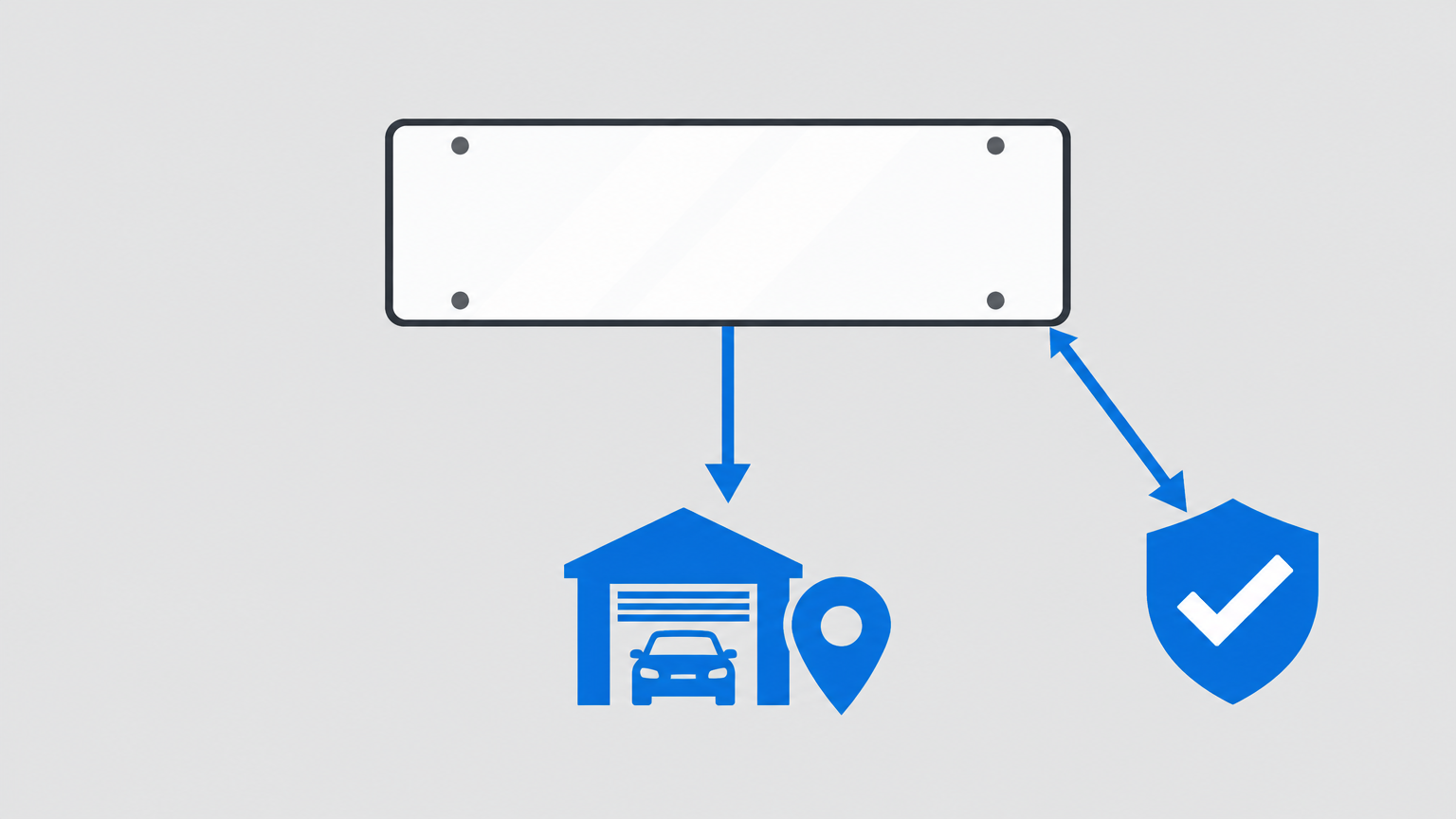
Every road-legal UK number plate carries two permanent markings along the bottom edge. If either marking is missing or unreadable, the plate is illegal for road use.
Look at the bottom centre of the plate for the name and postcode of the registered supplier that manufactured it. This mark identifies the DVLA-registered business responsible for producing the plate and checking entitlement documents. Look at the bottom right corner for the British Standard mark, which reads BS AU 145e.
Both markings must be printed clearly and permanently onto the plate surface. They sit cleanly along the lower margin without touching or crowding the registration characters. Plates bought online or in person without both marks are show plates and cannot be fitted to a vehicle driven on UK roads.
Backgrounds, Tints, Borders, and Flags
Front number plates must have a plain reflective white background, and rear number plates must have a plain reflective yellow background. Both surfaces must reflect light evenly across the full face of the plate.
Check the plate surface for any dark film, smoked acrylic, or tinted coating. Tinted and smoked backgrounds cut down reflectivity and reduce contrast between the backing and the black characters, so they are illegal on public roads. Honeycomb prints, carbon-fibre backgrounds, and custom graphics behind the lettering also fail road-legal requirements.
Plain borders are permitted around the outer edge of a road-legal plate, provided they keep clear of the characters and the bottom markings. National flags and country identifiers, such as the Union Jack or England flag, are permitted on the left-hand side of the plate when placed neatly in the left margin without crowding the registration.
Road-Legal Plates vs. Show Plates
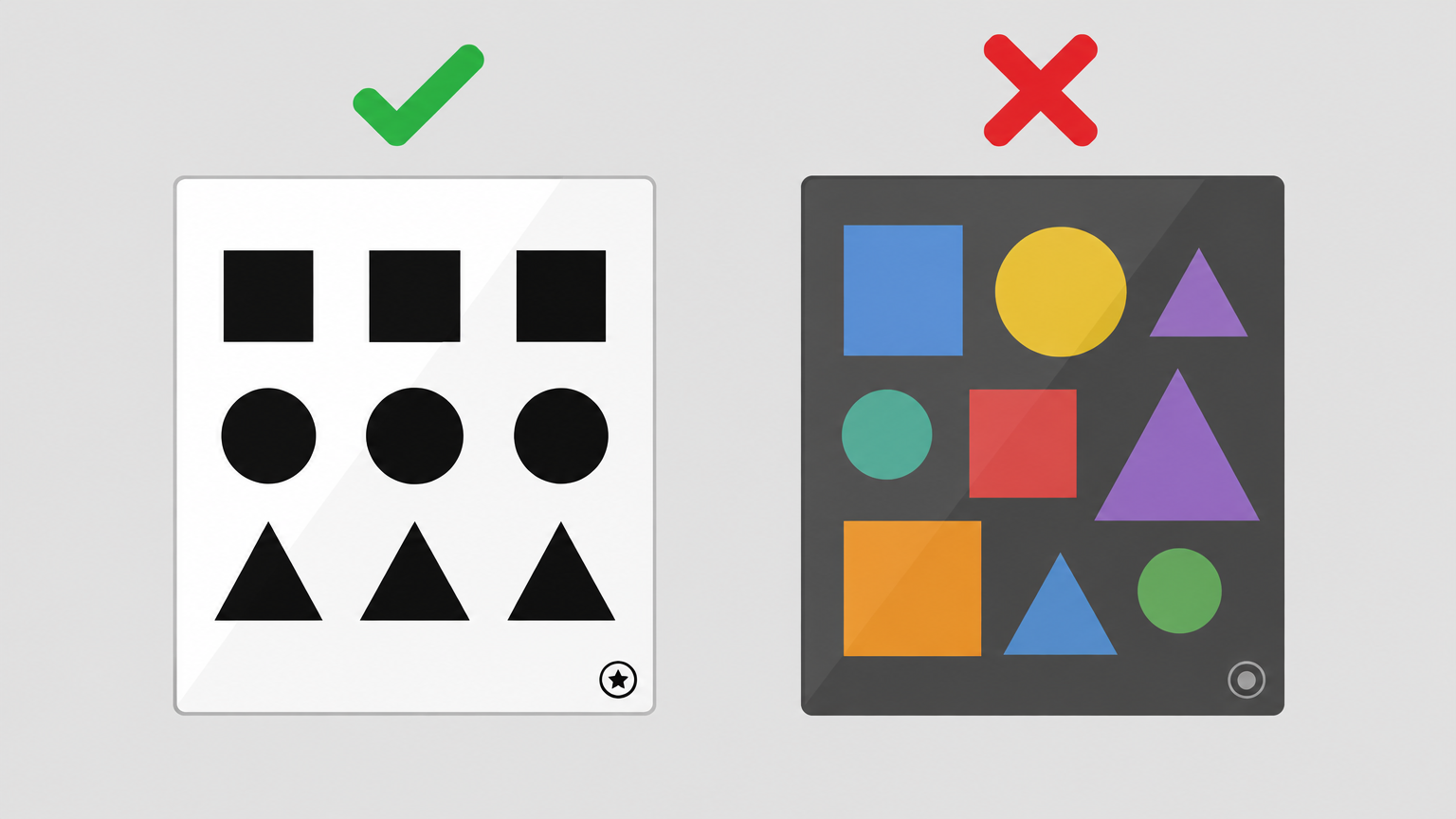
Custom show plates look similar to road plates at a glance, and they are built strictly for off-road use, car meets, track days, photography, and showroom displays. Because they are sold as memorabilia and signage, they allow tinted or smoked backgrounds, neon acrylic under-layers, carbon-effect 4D characters, and custom character spacing.
| Feature | Road-Legal Plate | Show Plate |
|---|---|---|
| British Standard | Marked BS AU 145e | No BS AU 145e mark |
| Supplier Details | Name and postcode in bottom centre | None required |
| Font and Spacing | Charles Wright, uniform spacing | Custom fonts and spacing allowed |
| Backgrounds | Plain reflective white front, yellow rear | Tinted, smoked, or patterned allowed |
| Character Finishes | Solid black 2D, 3D gel, or 4D acrylic | Neon layers and carbon-effect allowed |
| Permitted Use | Public UK roads | Off-road, car meets, and display only |
Driving on a UK public road with show plates fitted carries the risk of an MOT failure and a fine of up to £1,000. Keep show plates for private land and events, and fit BS AU 145e plates before driving on public highways.
Documents Required to Order Road-Legal Plates
As a DVLA-registered supplier, we are required by law to verify your identity and your right to use the registration before we manufacture any road-legal number plate. We cannot produce a BS AU 145e plate without seeing both documents.
You must provide two items when placing an order for road-legal plates:
- Proof of ID to confirm who is ordering the plates
- Proof of entitlement or ownership to show the registration belongs to your vehicle or is assigned to you
When you order online, our plate builder asks you to upload both documents before we print or cut your plates. When you visit our shop in person, bring your original documents with you so we can verify them at the counter before making your plates.
Frequently Asked Questions
Are 3D gel and 4D number plates legal in the UK?
Yes. Raised 3D black gel and 4D laser-cut acrylic plates are road-legal when they use solid black characters in the Charles Wright font, standard spacing, a plain reflective white front or yellow rear background, and carry our supplier details and the BS AU 145e mark.
Can I use tinted or smoked number plates on the road?
No. Tinted and smoked backgrounds reduce reflectivity and are illegal on UK public roads. They are sold as show plates for off-road display only.
What happens if I drive with show plates on public roads?
Driving on public roads with show plates can result in an MOT failure and a fine of up to £1,000.
What documents do I need to order road-legal plates?
You need proof of ID and proof of ownership or entitlement for the registration number.
Do motorbikes need a front number plate?
No. Motorbikes registered on or after 1 September 2001 only need a rear plate measuring 9 inches by 7 inches with two-line characters measuring 64mm tall by 44mm wide.
Getting Compliant Custom Plates Made
Num8er Plates Ltd makes road-legal 2D printed, 3D black gel, and 4D laser-cut number plates on site to the BS AU 145e standard at 133 Henry Street, Accrington, BB5 4EP. Your plates are made while you wait, and we offer in-shop fitting for an extra charge.
If you order online, orders placed before 1pm are dispatched the same day, and standard delivery is free on orders over £29.99. Every road-legal plate leaves our workshop with our supplier name and postcode in the bottom centre and the BS AU 145e mark in the bottom right.
Call us on 01254 917777, email [email protected], or visit our shop at 133 Henry Street, Accrington, BB5 4EP. We are open Monday to Thursday 10am to 8pm, Friday 2pm to 8pm, and Saturday 10am to 6pm, and we are closed on Sunday.